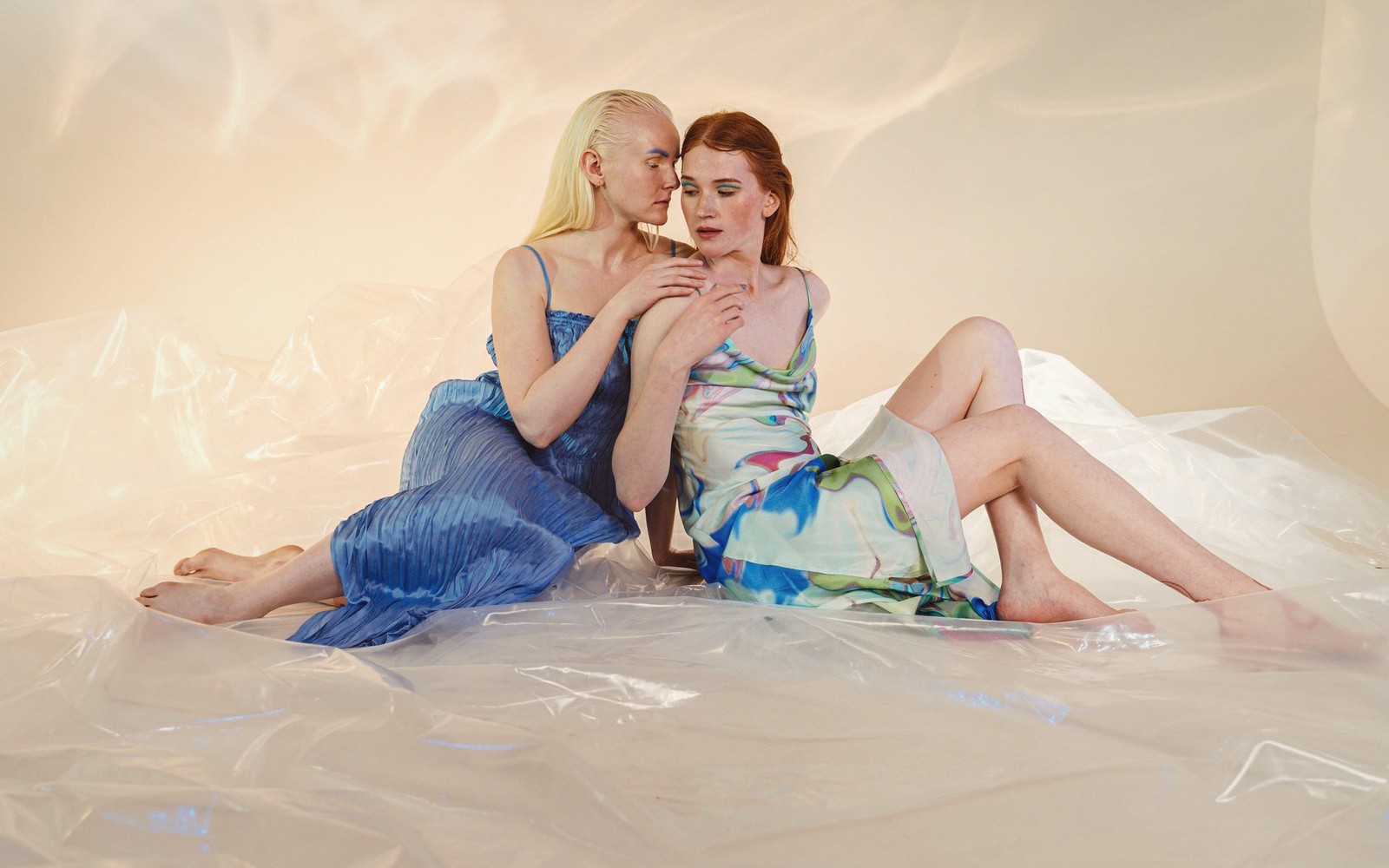
The Original and the Update
The slip dress arrived as a kind of dare: the least dress possible, worn as the whole outfit. Cut from satin or silk-adjacent fabric, bias-cut to skim the body, it was the uniform of a certain kind of cool that felt effortless precisely because it looked like you'd rolled out of bed and onto a red carpet. Kate Moss in Calvin Klein. Courtney Love in torn lace over a floaty slip. The shape didn't ask permission.
What's happening to it now is more interesting than a straight revival. The silhouette itself hasn't changed — still fluid, still low-cut, still doing that persuasive thing at the hip — but the logic of how it's worn has been completely renegotiated. The slip dress used to be the endpoint. Now it's the starting point.
A Short History of the Slip
The silhouette has been quietly reinventing itself for the better part of a century — each era borrowing the same fluid line and giving it a new set of manners.
- The 1930s — the bias-cut originCouturiers popularise cutting fabric diagonally across the grain, producing dresses that pour over the body rather than button onto it.
- The 1970s — lingerie steps outFluid, skin-close eveningwear blurs the line between underwear and outerwear as the decade chases ease and glamour in equal measure.
- The 1990s — minimalism's uniformThe slip becomes the emblem of pared-back nineties dressing: worn plain as the whole outfit, or layered over a plain white tee.
- The 2010s — the nostalgic revivalA wave of nineties nostalgia returns the slip to the runway and the high street, usually softened under knitwear.
- Now — the slip as a base layerBelted, layered and boot-stomped, the dress is styled as the start of an outfit rather than the end of one.
The Three Moves That Changed Everything
Layer it over, not just under. The nineties instinct was to wear a T-shirt beneath the slip, peeking out at the collar and hem — a trick that softened the look and made it street-ready. The current move reverses the logic entirely: a slim long-sleeve or fitted ribbed knit sits underneath, while a chunky cardigan, an oversized blazer, or even a denim jacket gets thrown on top, treating the dress as the base layer in a full outfit stack. The bias cut still does its work underneath all of it, but now the slip earns its keep in colder months too.
Belt it. Nothing clarifies a fluid dress faster than a belt cinching it at the waist — and the current preference runs toward something with weight and intention. A wide leather belt, a chain style sitting loose at the hip, or even a thin leather cord knotted rather than buckled: all of them interrupt the slip's deliberate drape in a way that feels decisive rather than fussy. The rule of thumb is contrast — a structured belt against liquid fabric is what creates the visual tension that makes the look land.
Stomp the hem. The footwear equation has shifted dramatically. Where strappy sandals and barely-there heels once seemed like the only logical finish, chunky boots — ankle, Chelsea, knee-high — now do most of the heavy lifting in terms of updating the silhouette. The deliberate visual mismatch between delicate fabric and a heavy sole is exactly the kind of fit and proportion tension that separates a considered outfit from a costume. It also makes the slip genuinely wearable through transitional weather, which might be the most practical argument of all.
What to Actually Do With the One You Have
The beauty of this particular update is that it doesn't require buying anything new — it requires looking at what you already own differently. A slip dress that's been living at the back of your wardrobe, waiting for the right summer occasion becomes, with a ribbed turtleneck and knee-high boots, a complete autumn outfit. With a tailored blazer belted over the top, it reads as smart-casual without effort. The fabric's natural drape handles the rest.
Colour matters less than you'd expect. Champagne satin, black velvet, dusty rose, dark floral — all of them respond well to the layering and belting logic because the underlying principle is about structure around fluid shape, not about any specific palette. If anything, the more unexpected the combination — a slip in deep burgundy under a camel trench, belted in tan leather — the better it tends to look.
The slip dress never really left. It just got tired of being treated as a one-note piece. Give it the right supporting cast, and it turns out it was always capable of this much range.
Kate Moss
In this piece
British model; iconic nineties slip dress wearer, synonymous with minimal cool
Courtney Love
In this piece
American musician and style figure; associated with the grunge-meets-slip-dress aesthetic
Calvin Klein
In this piece
American fashion house; central to nineties minimalism and slip dress culture