What a Gloss Actually Does
There's a specific kind of hair you keep clocking — on the street, across a restaurant, on the feed of someone who swears they're not doing anything special. It moves well. It catches light. It looks like hair at its absolute theoretical best. Nine times out of ten, the person behind it has had a gloss.
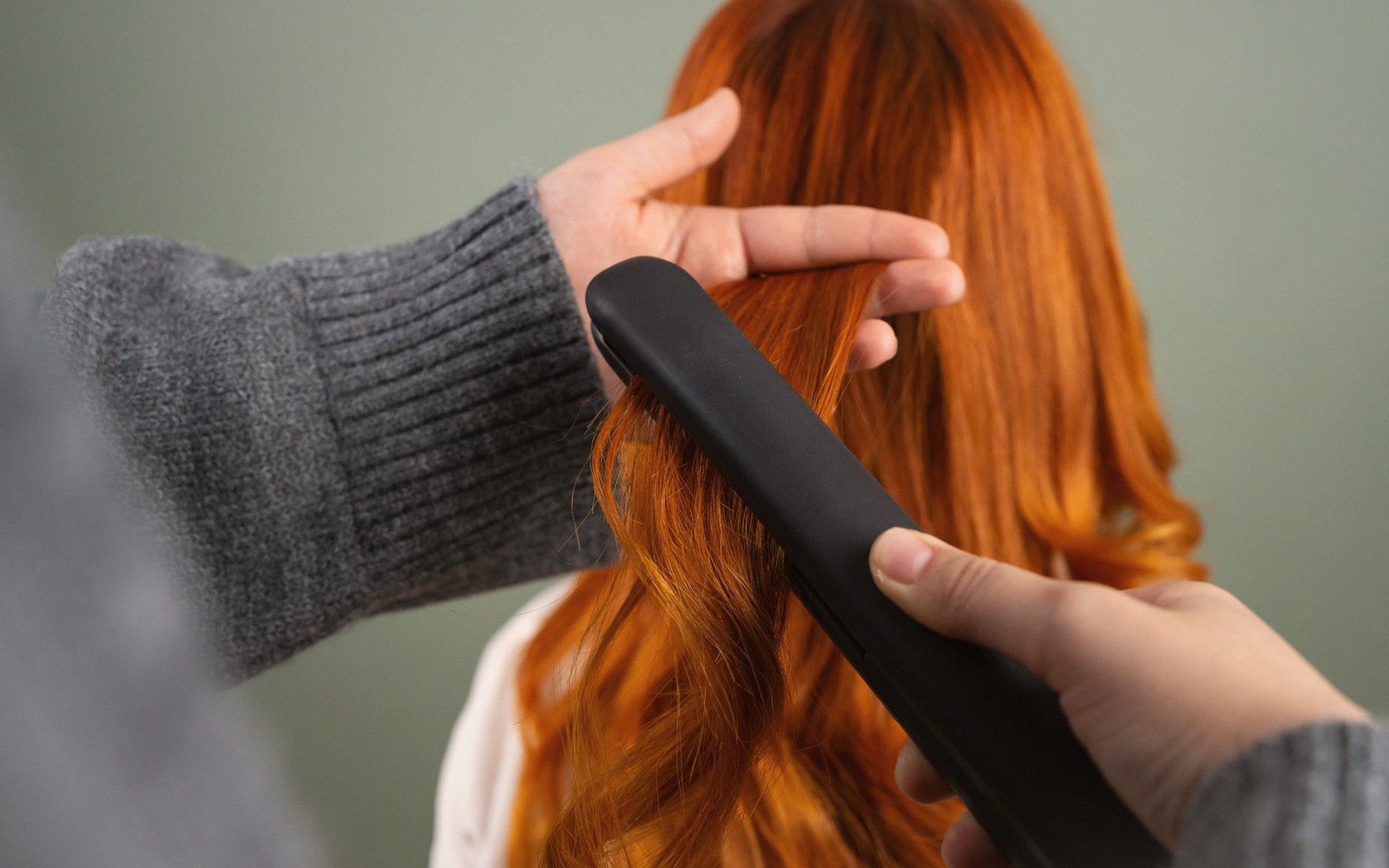
A gloss (sometimes called a glaze or toning treatment, depending on the salon) is a semi-permanent colour service applied in a thin, even layer over the hair shaft. Unlike a full colour, it doesn't lift — it deposits. That distinction matters enormously. Because it works with the cuticle rather than forcing it open, a gloss smooths the surface of each strand, and smooth surfaces reflect light uniformly. That's the physics of the shine people are booking appointments for.
Most glosses are acidic, which causes the cuticle to lie flat, and many contain bonding agents or conditioning ingredients that fill in surface damage along the way. The result lasts roughly four to six weeks before fading gradually and gracefully — no harsh regrowth lines, no sudden dullness, just a slow return to your baseline.
Not colour, not care — shine, sold by the appointment.
Who It's For (Which Is Almost Everyone)
The gloss isn't a treatment that requires a specific hair type or condition to work. Colour-treated hair benefits because toning glosses neutralise unwanted warmth or brassiness — this is where clear glosses on blondes and tinted glosses on brunettes earn their keep. Natural hair benefits because the smoothing and light-reflecting properties improve texture and depth regardless of pigment. Even fine hair, which can be weighted down by heavy masks or oils, responds well: a gloss adds no physical bulk, only optical richness.
There are two broad camps: in-salon professional glosses and at-home versions. In the salon, a colourist can customise the formulation — adjusting tone, intensity and processing time for your specific hair — and the results tend to be more pronounced and longer-lasting. At-home glosses, available from a range of professional and accessible hair brands, have improved markedly and are a reasonable option for maintenance between salon visits, though they rarely match the precision of a bespoke application.
The Honest Cost-Benefit
A standalone gloss service is usually one of the more affordable salon offerings — significantly less than a full colour or balayage — which is part of its current appeal. It can be added onto another service for a relatively modest uplift, or booked as its own thirty-minute appointment when hair needs a reset rather than a transformation. For anyone navigating the gap between colour appointments, a toning gloss in particular can extend the life of a more expensive treatment by several weeks.
The only honest caveat: a gloss won't repair structural damage. Split ends, breakage from heat tools, or serious chemical damage are mechanical problems that need cutting away or a bonding treatment like Olaplex — not a gloss. What a gloss does is make structurally sound hair look its best version of itself, and do it without the commitment of permanent colour.
Which might be why the appointment book is full. In an era of skin-first beauty and low-effort glow, there's real appetite for treatments that deliver visible results without upheaval. A gloss asks almost nothing of you — thirty minutes, no dramatic change, no awkward grow-out — and returns something that reads, to everyone around you, like exceptional genetics.
Olaplex
In this piece
professional hair-bonding treatment brand widely used in salons for structural repair