Why Proportion Does the Heavy Lifting
Nobody walks away from a great outfit thinking "good fit". They just think: polished, put-together, expensive-looking. Fit is the invisible infrastructure. When it's right, everything else reads better — the colour pops, the fabric falls, the whole thing holds together. When it's off, no amount of styling rescues it. A beautiful blazer can look rumpled and cheap if the shoulders sit wrong; a twenty-pound t-shirt can look considered if it skims the body correctly.
The rule most worth memorising: volume lives in one place at a time. Wide leg with a fitted top. Oversized jacket with a slim or tucked base. Voluminous skirt with something streamlined above. This isn't a rigid formula — fashion breaks it deliberately and often — but as a default, it creates visual balance that registers as intentional rather than accidental.
The Specific Moves That Work
Shoulder placement is non-negotiable. The shoulder seam of a jacket or coat should sit at or very close to your actual shoulder. Too far in and the sleeves bunch; too far out and the whole upper body reads wide and shapeless. This single point is worth understanding because it's also the hardest to fix at home — and the first thing a tailor addresses.
Trouser length shapes the whole silhouette. Full-length trousers that break slightly at the shoe elongate. Cropped trousers expose the ankle and add lightness. What kills both effects is the in-between: trousers that end somewhere vague, neither here nor there. If you're not cropping, let them land.
The tuck — even a partial one — changes proportion. A half-tuck (front hem tucked, back left out) creates a waist suggestion without committing to a fully tucked look. It shifts the visual weight upward, which is usually flattering.
Sleeve length on a blazer matters more than people realise. A half-inch to an inch of shirt cuff showing beneath a blazer sleeve is a classic proportion trick — it signals that the blazer fits. Sleeves that swallow the hand close down the look; sleeves that end mid-forearm read casual in a way that may or may not be what you want.
Know where you want the eye to travel. Proportion is, at its core, about directing attention. A belt at the natural waist creates a focal point and breaks a longer top or dress into more flattering thirds. A monochrome look draws the eye along the full line of the body, which elongates. A strong contrast — light top, dark bottom, or vice versa — creates a horizontal break.
When to Call in a Tailor
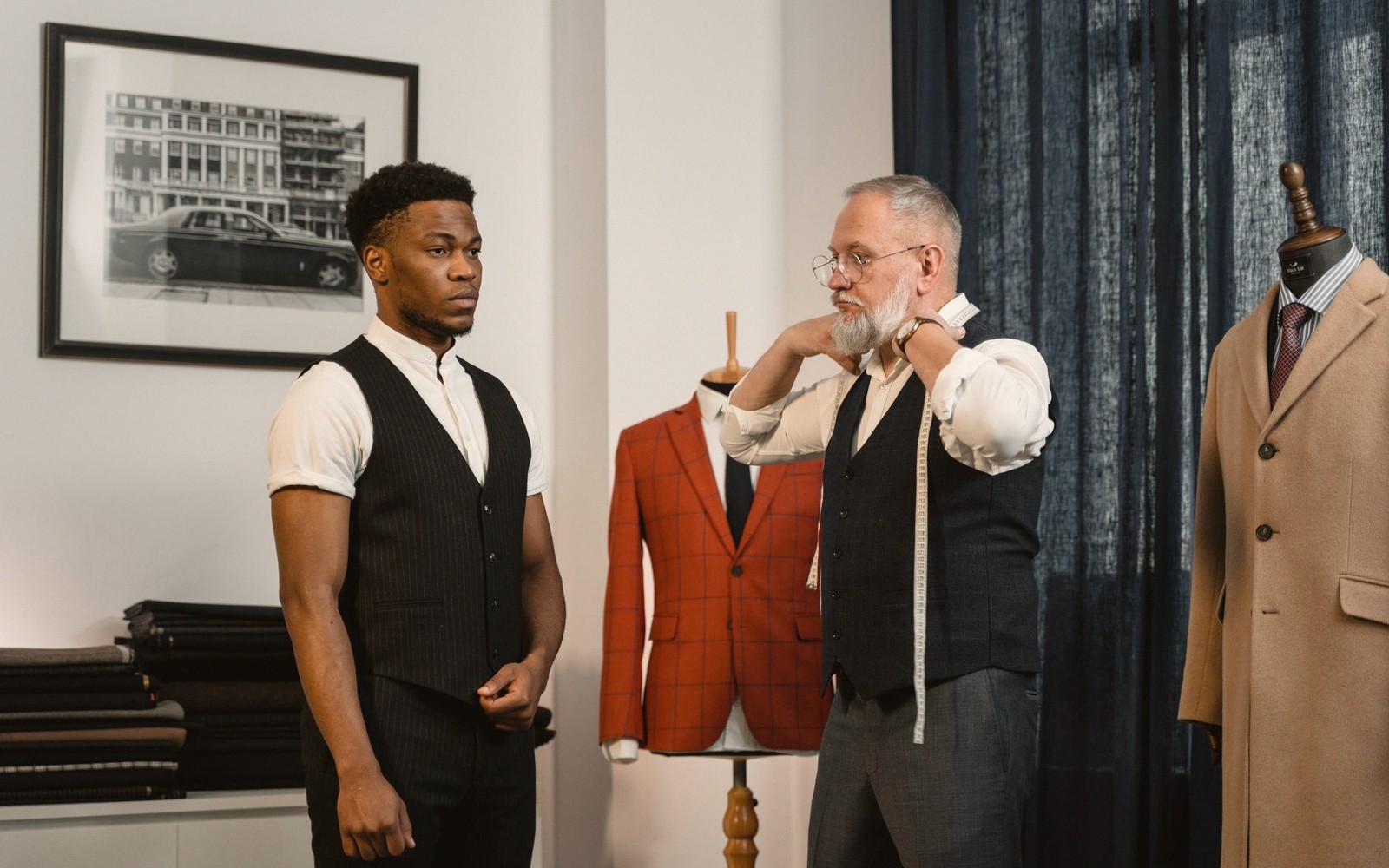
Alterations feel expensive right up until you wear the result — then they feel obvious. A tailor taking in a waistband, shortening a hem, or nipping in a jacket back costs less than most people assume and adds more value than most accessories. The items worth tailoring are the ones you already love but don't quite reach for: the coat that fits everywhere but the sleeves, the trousers that are perfect but long. Spend on altering what you own before buying something new.
The quieter truth about fit is that it democratises fashion completely. Price, label, season — none of it matters as much as whether the shoulder sits right and the hem lands where it should. That's the skill: learning to see it, and then refusing to settle.
tailor
In this piece
a specialist who alters and adjusts garments for individual fit